What Is a CNC Turn-Mill Multitasking Machine? And Why Does Precision Manufacturing Rely on It?
In the field of precision parts machining, you have likely heard of CNC lathes and CNC milling machines. In recent years, however, the CNC Turn-Mill Multitasking Machine has become an indispensable star among manufacturing equipment.
Why are industries ranging from automotive components and medical devices to robotic joints and high-end optical products increasingly turning to turn-mill machining? This article explains, in the clearest possible terms, this cutting-edge technology that does the work of multiple machines and achieves “one setup, complete part.”
What Is CNC? The “Precision Craftsman” of the Digital Age
CNC stands for Computer Numerical Control. In simple terms, it uses computer programs to precisely control a machine’s tool paths and machining parameters, replacing the traditional method of manually turning handwheels.
Traditional machining is like a chef cooking by hand — heavily dependent on the master’s feel for heat and timing, and prone to variation from batch to batch. CNC, by contrast, is more like a fully automated, high-performance cooking machine: once you input a precise recipe (the program), it can run around the clock, ensuring that every dish (part) comes out with near-perfect consistency in flavor, doneness, and quality.
The core value of CNC machining:
- Ultimate precision: tolerances controllable to the micron level.
- High quality stability: eliminates errors caused by human fatigue.
- Efficient repeatable production: suitable for everything from 10-piece prototypes to 10,000-piece mass production.
What’s the Difference Between a Lathe and a Milling Machine?
Before appreciating the power of turn-mill machining, we must first distinguish these two pillars of machining:
Machining Method | Core Principle | Suitable Shapes | Application Examples |
Turning | The workpiece rotates while the tool stays fixed — cutting the outer diameter like sharpening a pencil. | Cylinders, shafts, threads | Drive shafts, screws, fittings |
Milling | The tool rotates while the workpiece stays fixed — like a carving knife moving across the material. | Flat surfaces, holes, contoured slots | Heat sinks, housings, molds |
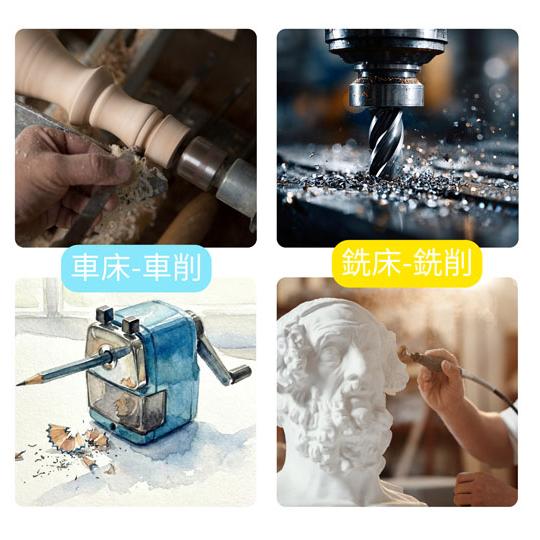
So What Is a Turn-Mill Multitasking Machine?
A turn-mill multitasking machine integrates the rotational power of a lathe and the cutting capability of a milling machine within a single space. Equipped with a live tooling turret, it can not only turn a part round but also drill, mill flats, and perform side tapping — and even carry out complex eccentric machining — all in the same position.
The evolution of the process:
- Traditional workflow: Lathe machining > stop and unload > transfer > second setup on the milling machine > drilling.
- Turn-mill workflow: One-hit machining (single setup) > all operations completed automatically > finished part unloaded.
Why Is the Turn-Mill Machine the First Choice for Precision Manufacturing?
Advantage 1: Reducing the “hidden costs” of machine changeovers and transfers
In traditional processes, parts move between different machines, and each transfer adds the risk of impact damage and time spent waiting in queue. The turn-mill machine eliminates this “non-productive time,” streamlining the production line.
Advantage 2: Avoiding accumulated error for greater dimensional accuracy
Every time a part is removed and re-clamped, a tiny “positioning error” is introduced. For precision medical or aerospace parts, accumulated error can result in scrap. By completing machining from a single datum point, the turn-mill machine achieves:
- More perfect concentricity.
- More accurate relative positioning (straightness, perpendicularity).
Advantage 3: Shortening lead times and strengthening market competitiveness
Although the machine’s purchase cost is higher, the significant reduction in operations, lower labor requirements, and shorter setup times markedly decrease the overall production cycle time, helping customers receive finished parts sooner.
Advantage 4: Tackling more complex geometries
Modern products strive to be lighter, thinner, and more compact, and part designs often include complex curved surfaces and multi-angle holes. A turn-mill machine equipped with Y-axis capability or 5-axis simultaneous machining can readily produce contoured structures beyond the reach of conventional machines — such as medical implants or precision robotic gears.
What Kinds of Machining Can It Perform?
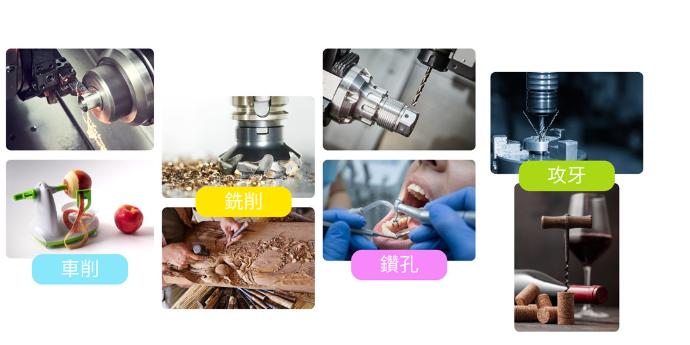
Beyond simple round bars, the turn-mill machine can handle:
- Basic: outer-diameter turning, inner-diameter boring, face milling.
- Advanced: cross drilling and tapping, circumferential grooving.
- High-end: eccentric machining, polygon milling (hexagonal/square), angular-surface machining.
Is Every Part a Good Fit?
When advising customers on whether turn-mill machining is needed, we typically weigh the following factors:
- Structural complexity: if a part only needs to be “turned round,” a conventional lathe is more economical; if it involves two or more asymmetrical machining features, a multitasking machine is the better fit.
- Tolerance requirements: if the product calls for 0.01 mm or even finer, single-setup machining is strongly recommended.
- Production volume: the advantages of a multitasking machine are most pronounced at medium-to-high volumes that demand high quality stability.
- Lead-time pressure: when rush shipments are required, reducing process transfers is key.
Frequently Asked Questions (FAQ)
The equipment’s depreciation cost is higher, but once hidden costs — manual handling, second-setup fixture expenses, reduced scrap rates, and shorter lead times — are factored in, the total manufacturing cost is often actually lower.
Absolutely. Especially for slender, miniature parts, a Swiss-type turn-mill machine provides excellent support and precision, making it the top choice for electronic components and dental implants.
Beyond machine performance, a quality machining shop pairs its equipment with high-precision measuring instruments — such as CMMs and optical comparators — to ensure that every fine hole and surface after multitasking machining conforms to the design drawings.
Not entirely. A Swiss-type lathe is a CNC lathe particularly suited to slender, small parts, and many high-end Swiss-type lathes themselves also feature turn-mill capability.
Still have questions about turn-mill machining? Or struggling to strike the “golden balance” among precision, cost, and lead time?
With years of dedicated expertise in precision parts, Dao Siang Industrial has introduced high-end Swiss-type CNC lathes capable of performing turning, milling, drilling, and tapping — and other complex operations — simultaneously within a single machine. Whether the challenge is a demanding structure or an ultra-small part, our extensive customization experience allows us to offer you the most optimized production path.
[Contact our technical team now for a professional assessment]